EU REACH Restrictions on D4, D5, and D6: What Companies Need to Know
The European chemical industry is facing increasing regulatory requirements, with sustainability, environmental protection, and product compliance becoming key considerations across global supply chains.
Among recent regulatory developments, restrictions on D4, D5, and D6 under the EU REACH framework have attracted growing attention from companies involved in silicone materials, chemical manufacturing, and downstream applications.
For businesses operating in global markets, understanding these regulatory changes and evaluating their impact on raw materials, formulations, and supply chain management are becoming increasingly important.
What Are D4, D5, and D6?
D4, D5, and D6 are cyclic siloxanes:
- D4: Octamethylcyclotetrasiloxane
- D5: Decamethylcyclopentasiloxane
- D6: Dodecamethylcyclohexasiloxane
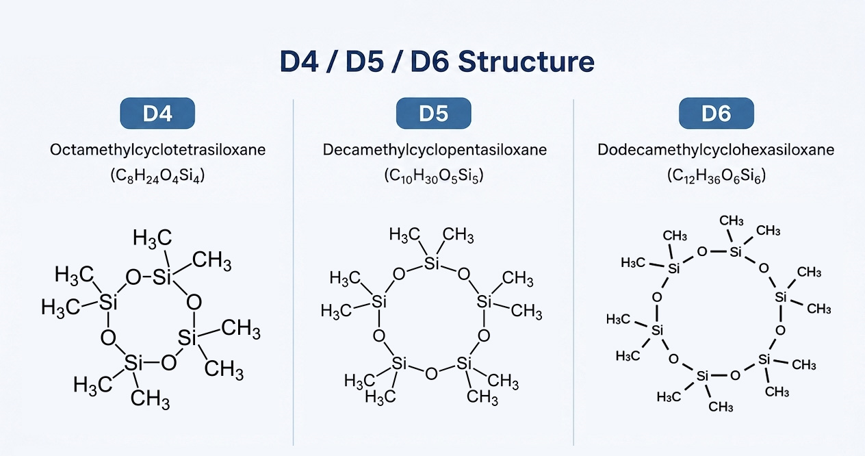
These substances are important components in silicone chemistry and are associated with various silicone-based materials and formulations.
Due to their unique properties, including:
- Chemical stability
- Low surface tension
- Thermal resistance
- Compatibility with different formulations
cyclic siloxanes have been widely used in silicone-related applications and industrial processes.
With increasing attention toward environmental impact and chemical sustainability, regulatory evaluation of these substances has become an important topic for the silicone industry.
Why Are D4, D5, and D6 Receiving Regulatory Attention?
Under the EU REACH framework, chemical substances are evaluated based on their potential impact on human health and the environment.
D4, D5, and D6 have received regulatory attention due to concerns related to properties such as:
- Environmental persistence
- Potential bioaccumulation
- Long-term environmental effects
As regulatory requirements continue to evolve, companies involved in silicone materials and related applications need to pay closer attention to substance composition, residual levels, and compliance documentation.
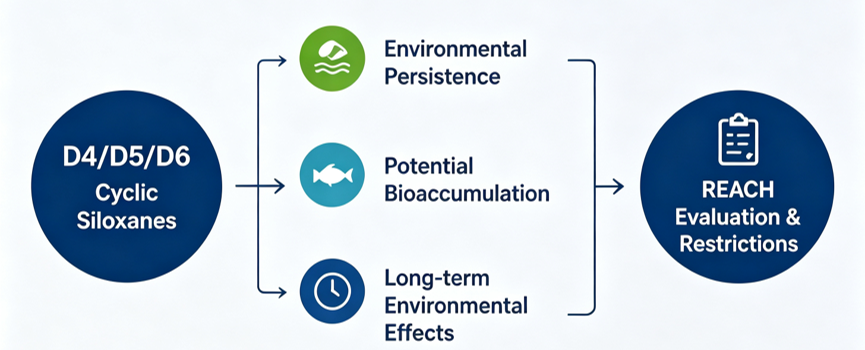
These developments reflect the broader transformation of the European chemical industry toward greater transparency, sustainability, and responsible chemical management.
How Could These Changes Affect Silicone Supply Chains?
The impact of regulatory developments extends beyond individual substances. It can influence multiple stages of the value chain, including raw material suppliers, manufacturers, distributors, and downstream users.
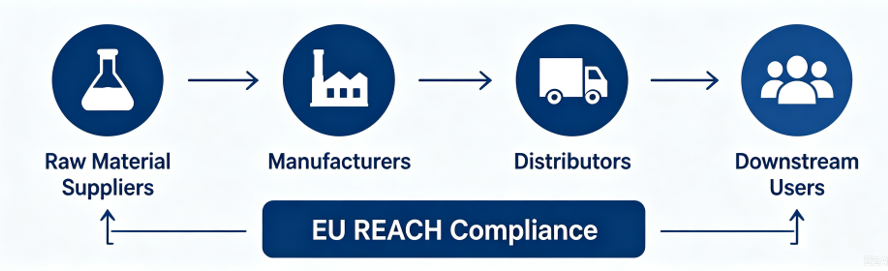
1. Raw Material Evaluation Is Becoming More Important
Traditional raw material evaluation often focuses on performance parameters such as viscosity, purity, and functional properties.
However, regulatory compliance information is becoming increasingly important.
Companies may need to evaluate:
- Whether raw materials contain D4, D5, or D6
- The potential level of cyclic siloxane residues
- Availability of relevant compliance documentation
For silicone-related materials, residual control and regulatory transparency are becoming important factors in supplier selection.
2. Formulation Development May Require Additional Evaluation
For silicone-based products such as:
- Silicone oils
- Silicone additives
- Adhesives and sealants
- Coatings
- Defoamers
changes in raw materials may require additional technical evaluation.
Replacing or optimizing silicone materials is not always a simple substitution process. Changes may influence:
- Compatibility
- Surface performance
- Volatility
- Stability
- Processing behavior
Therefore, performance validation remains an important step during material transitions.
3. Supply Chain Communication Becomes Increasingly Important
Modern chemical supply chains require more than consistent product quality.
Customers are increasingly looking for:
- Updated SDS and TDS documentation
- Regulatory statements
- Compliance information
- Supporting test data when required
Close cooperation between suppliers and customers helps ensure smoother regulatory management and long-term supply reliability.
How Can Companies Prepare?
To better respond to evolving regulatory requirements, companies can consider the following approaches:
1. Review Existing Materials and Products
Companies should evaluate:
- Current raw material sources
- Potential D4/D5/D6 presence
- Available compliance information
- Customer-specific requirements
A clear understanding of the supply chain is the first step toward effective compliance management.
2. Evaluate Suitable Material Solutions
Companies can assess alternative approaches, including:
- Low-cyclic silicone materials
- Optimized silicone formulations
- Alternative silicone-based technologies
The goal is to maintain required product performance while meeting evolving regulatory expectations.
3. Maintain Updated Technical Documentation
When materials or formulations change, related documents should also be reviewed and updated, including:
- Safety Data Sheets (SDS)
- Technical Data Sheets (TDS)
- Regulatory statements
- Customer compliance documents
Consistent technical and regulatory communication helps prevent potential challenges during customer audits or market expansion.
Compliance and Innovation Go Hand in Hand
Regulatory developments such as REACH restrictions are not only compliance considerations but also drivers for innovation.
They encourage companies to improve:
- Material selection
- Product design
- Supply chain transparency
- Sustainability practices
For businesses operating internationally, staying informed about regulatory trends is essential for maintaining competitiveness and building reliable partnerships.
Supporting Customers in a Changing Regulatory Environment
At LANYACHEM, we understand that regulatory compliance is an important part of modern chemical supply chains.
By maintaining close communication with customers and monitoring global regulatory developments, we support partners in evaluating material solutions, improving supply chain transparency, and meeting changing market requirements.
Reliable chemical solutions require not only consistent quality, but also a strong understanding of regulatory expectations.