From Shikimic Acid to Oseltamivir: Key Raw Materi…
The development and manufacturing of antiviral medicines rely on a wide range of raw materials, intermediates, and chemical reagents. Oseltamivir, a widely used antiviral medicine, is one example of a pharmaceutical product whose synthesis involves multiple chemical transformations. Among the materials associated with pharmaceutical synthesis, shikimic acid is an important chiral starting material, while triethylsilane is a versatile reducing reagent used in a variety of organic synthesis processes. Shikimic Acid: A Valuable Starting Material Shikimic acid is a naturally occurring organic compound with a defined cyclic structure, multiple stereocenters, and several functional groups that can be further transformed. These structural characteristics make shikimic acid a valuable chiral building block in organic synthesis. In synthetic approaches related to oseltamivir, its carbon framework and stereochemical features provide a useful starting point for constructing more complex molecular structures. Rather than building a complex structure entirely from simple molecules, starting from a molecule that already contains the desired stereochemical information can provide an efficient synthetic foundation. Triethylsilane: A Versatile Reducing Reagent Triethylsilane is an organosilicon compound widely used as a reducing reagent in organic synthesis. Depending on the reaction system, triethylsilane can participate in various reduction and functional-group transformation processes. Its versatility makes it useful across fine chemical and pharmaceutical synthesis. Although triethylsilane is not part of the final drug molecule, reagents such as this can play an important role in individual steps of a multi-stage synthesis. Why Raw Material Quality Matters Pharmaceutical synthesis typically involves multiple reaction and purification steps. The quality and consistency of starting materials and reagents can therefore influence downstream processing. Raw material quality → reaction performance → impurity control → intermediate quality → purification → final product For pharmaceutical manufacturers, considerations go beyond purity alone. Batch-to-batch consistency, impurity profiles, packaging, storage conditions, and supply continuity can all become important when a product moves from laboratory research toward commercial-scale production. From Chemical Raw Materials to Reliable Supply For manufacturers, a qualified chemical raw material needs to meet both technical and supply requirements. Reliable sourcing means maintaining: Consistent product quality Stable batch-to-batch performance Reliable production and supply capacity Effective quality control At LANYACHEM, we provide chemical raw materials and fine chemicals for pharmaceutical and other specialized applications, including Shikimic Acid and Triethylsilane (YAC-TES). From starting materials to synthetic reagents, we are committed to supporting our customers with consistent products and reliable supply for R&D and manufacturing applications. Interested in Shikimic Acid, Triethylsilane, or other pharmaceutical synthesis materials? Feel free to contact us to learn more.
Read More
LANYACHEM to Attend EPCA 2026 in Vienna
LANYACHEM will attend the 60th Annual Meeting of the European Petrochemical Association (EPCA), taking place from October 5–8, 2026, in Vienna, Austria. As one of the key gatherings for the European petrochemical and chemical industry, EPCA provides an important platform for industry professionals to exchange ideas, explore business opportunities and strengthen connections across the value chain. At EPCA 2026, LANYACHEM will engage with industry partners and customers to discuss market developments, application needs and potential cooperation in specialty chemicals and organosilicon chemistry. With experience in the research, development and production of specialty chemical products, LANYACHEM serves customers across different markets and applications. Our product portfolio includes organosilicon compounds, acetylacetone derivatives, plastic additives and pharmaceutical intermediates, among other specialty chemical products. We look forward to meeting customers, partners and industry professionals in Vienna and exchanging ideas on opportunities and developments within the chemical industry. Event: EPCA 60th Annual MeetingDate: October 5–8, 2026Location: Vienna, Austria We look forward to meeting you at EPCA 2026!
Read More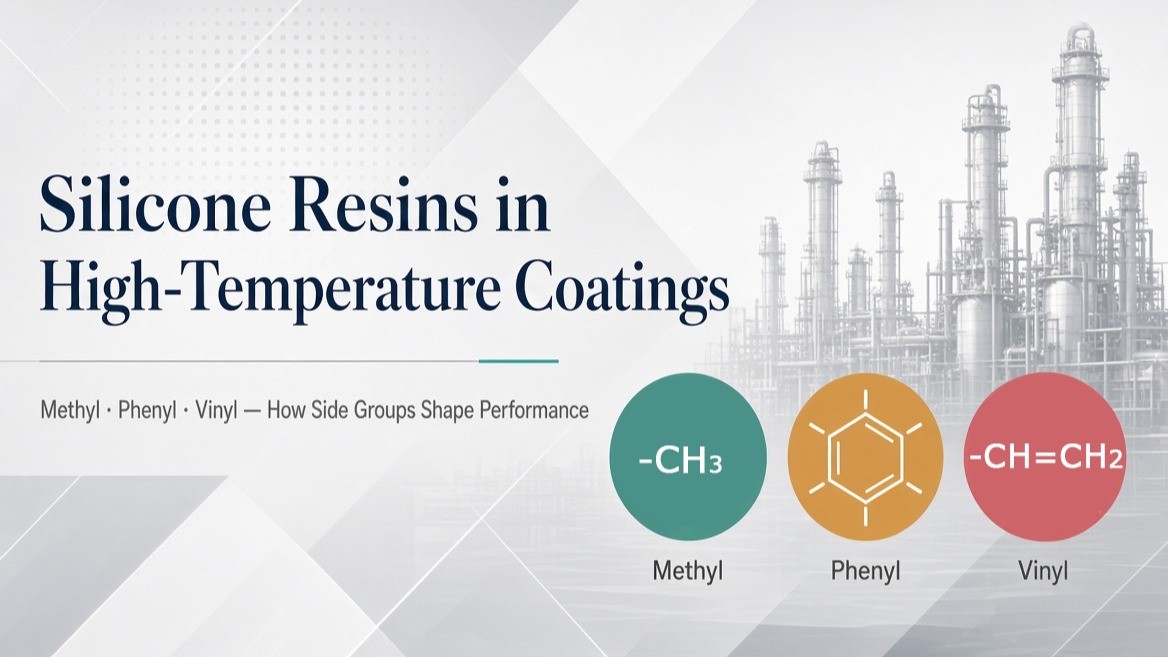
Silicone Resins in High-Temperature Coatings: Wha…
Silicone resins are widely used as binders in high-temperature coatings. Compared with many conventional organic resins, they offer good resistance to heat, weathering and ageing, making them suitable for high-temperature coatings, industrial equipment and applications requiring long-term thermal stability. But not all silicone resins behave in the same way. The organic groups attached to the silicon atoms can change the molecular structure of the resin and, in turn, influence hardness, flexibility, thermal stability and the crosslinked network formed during curing. Among the groups commonly encountered in silicone resin systems are methyl, phenyl and vinyl. 01|Methyl: A Balanced Property Profile Methyl is one of the most common organic groups in silicone materials. Silicone resins containing a high proportion of methyl groups generally have a relatively simple structure. The small steric size of the methyl group allows the siloxane backbone to retain good stability. Combined with the relatively strong Si–O bonds, this structure contributes to good heat and weather resistance while maintaining a certain degree of flexibility. For high-temperature coatings, methyl-based silicone resins are widely used, particularly in systems where heat resistance, weatherability and electrical insulation are important. One of their characteristics is a relatively balanced property profile. They do not simply pursue high hardness at the expense of flexibility. However, when a formulation requires higher hardness, chemical resistance or improved stability at elevated temperatures, methyl groups alone may not provide the desired balance. Other organic groups can then be introduced to modify the resin structure. 02|Phenyl: Influencing Rigidity, Hardness and Thermal Performance Compared with methyl, the phenyl group is larger and more rigid. Introducing phenyl groups changes the molecular structure, rigidity and thermal characteristics of the silicone resin. In many high-temperature coating systems, methyl-phenyl silicone resins are used to achieve a balance between heat resistance, hardness and mechanical properties. As the phenyl content changes, properties such as hardness, flexibility, glass-transition behaviour and compatibility with other resins or formulation components can also change. So, a higher phenyl content does not simply mean higher temperature resistance. The actual choice needs to consider the operating temperature, required hardness, mechanical performance and curing conditions of the coating system. 03|Vinyl: Reactivity Is the Key Vinyl groups have a somewhat different role compared with methyl and phenyl groups. The main point of interest with vinyl is not simply its contribution to high-temperature resistance, but its reactivity. Vinyl groups can serve as reactive sites for further crosslinking. In addition-cure silicone systems, vinyl groups can participate in the crosslinking reaction and therefore influence the network structure formed during curing. This means that vinyl groups are closely related to the curing mechanism and crosslink density. The degree and type of crosslinking, together with the compatibility of other reactive components, can subsequently affect the hardness, heat resistance, chemical resistance and mechanical properties of the cured coating. Therefore, when a formulation contains vinyl-functional silicone components, it is important to look beyond the question of “how high a temperature can it withstand?” The role it plays in the overall curing system also matters. 04|How Should We Understand the Three Groups? In simple terms: Methyl mainly contributes to the basic heat and weather resistance of the silicone structure while helping maintain a certain degree of flexibility. Phenyl has a stronger influence on rigidity, hardness and thermal behaviour, and is often combined with methyl in high-temperature coating systems. Vinyl mainly provides reactive functionality and can participate in crosslinking in specific curing systems. This does not mean that the three groups can simply be ranked as “better” or “worse”. In practical silicone resin design, the final properties are rarely determined by one organic group alone. Different groups can be combined to achieve a suitable balance for a specific application. The type and ratio of substituents are only part of the picture. Molecular weight, functionality, siloxane structure, curing mechanism and the other components in the formulation can all influence the final coating performance. This is one reason methyl-phenyl silicone resins are commonly used in high-temperature coatings: the two groups can influence different aspects of resin performance, allowing the formulation to balance heat resistance, hardness, flexibility and long-term stability. 05|Choosing a Silicone Resin: Temperature Rating Is Not the Whole Story When selecting a silicone resin for a high-temperature coating, the temperature rating is certainly important. But it does not tell the whole story about how a coating will perform under actual service conditions. Coating thickness, pigments and fillers, curing conditions, resin compatibility and long-term thermal cycling can all affect the final performance. Instead of simply asking whether methyl, phenyl or vinyl is “better”, it is more useful to first define what the coating actually needs to achieve: Is the application exposed to continuous high temperatures or short-term temperature peaks? Is hardness the priority, or is a certain degree of flexibility also required? Does the system use a conventional curing process, or does it rely on a specific reaction to form a crosslinked network? Different requirements call for different structural approaches. For silicone materials, performance is rarely determined by a single functional group. The practical approach is to match the resin structure and curing behaviour with the application and formulation requirements, and find the right balance between heat resistance, hardness, flexibility and curing performance.
Read More
LANYACHEM at CPHI Milan 2026 | Stand 1G40
CPHI Milan 2026 is just around the corner. From October 6–8, 2026, LANYACHEM will be exhibiting at Fiera Milano, Italy, where we will showcase selected products across organosilicon chemistry, pharmaceutical intermediates, and specialty chemical solutions. 📍 Stand: 1G40 At CPHI Milan, visitors will have the opportunity to explore selected products from our portfolio, including materials for pharmaceutical synthesis, silylation and protection, organosilicon chemistry, and peptide-related applications. 01 | Oseltamivir Synthesis Our portfolio includes key materials used in oseltamivir-related synthesis: Triethylsilane (YAC-TES) Shikimic Acid These products can serve as important materials in synthetic routes related to pharmaceutical chemistry. 02 | Silylation & Protection We will also showcase a range of silane reagents for silylation, protection, and related organic synthesis applications: tert-Butyldimethylchlorosilane (YAC-TBDMCS) Hexamethyldisilazane (YAC-HMDS) Triisopropylsilane (YAC-TIPS) Trimethylchlorosilane (YAC-TMCS) N,O-Bis(trimethylsilyl)acetamide (YAC-BSA) These products serve as useful reagents and building blocks in a variety of synthetic and pharmaceutical chemistry processes. 03 | Siloxane Intermediates Our organosilicon portfolio also includes siloxane intermediates such as: Hexamethyldisiloxane (YAC-HMDSO) Tetramethyldisiloxane (YAC-TMDS) These materials are part of our broader portfolio of organosilicon products for synthesis and specialty chemical applications. 04 | SNAC & Peptide-related Products In addition to the products above, we will introduce a selection of newly added SNAC-related intermediates and peptide-related products at CPHI Milan. SNAC-related intermediates: Ethyl 8-Bromooctanoate Carsalam (1,3-Benzoxazine-2,4-dione) Peptide-related products: Semaglutide Atosiban Acetate Somatostatin Terlipressin Acetate Teriparatide These products further expand our portfolio in pharmaceutical-related chemistry and complement our existing capabilities in specialty chemical development and supply. Meet LANYACHEM at CPHI Milan 2026 Whether you are looking for organosilicon reagents, pharmaceutical intermediates, specialty chemicals, or customized chemical solutions, we welcome the opportunity to meet with you and discuss potential cooperation. 📅 October 6–8, 2026📍 Fiera Milano, Italy📌 Stand 1G40 We look forward to meeting you in Milan.
Read More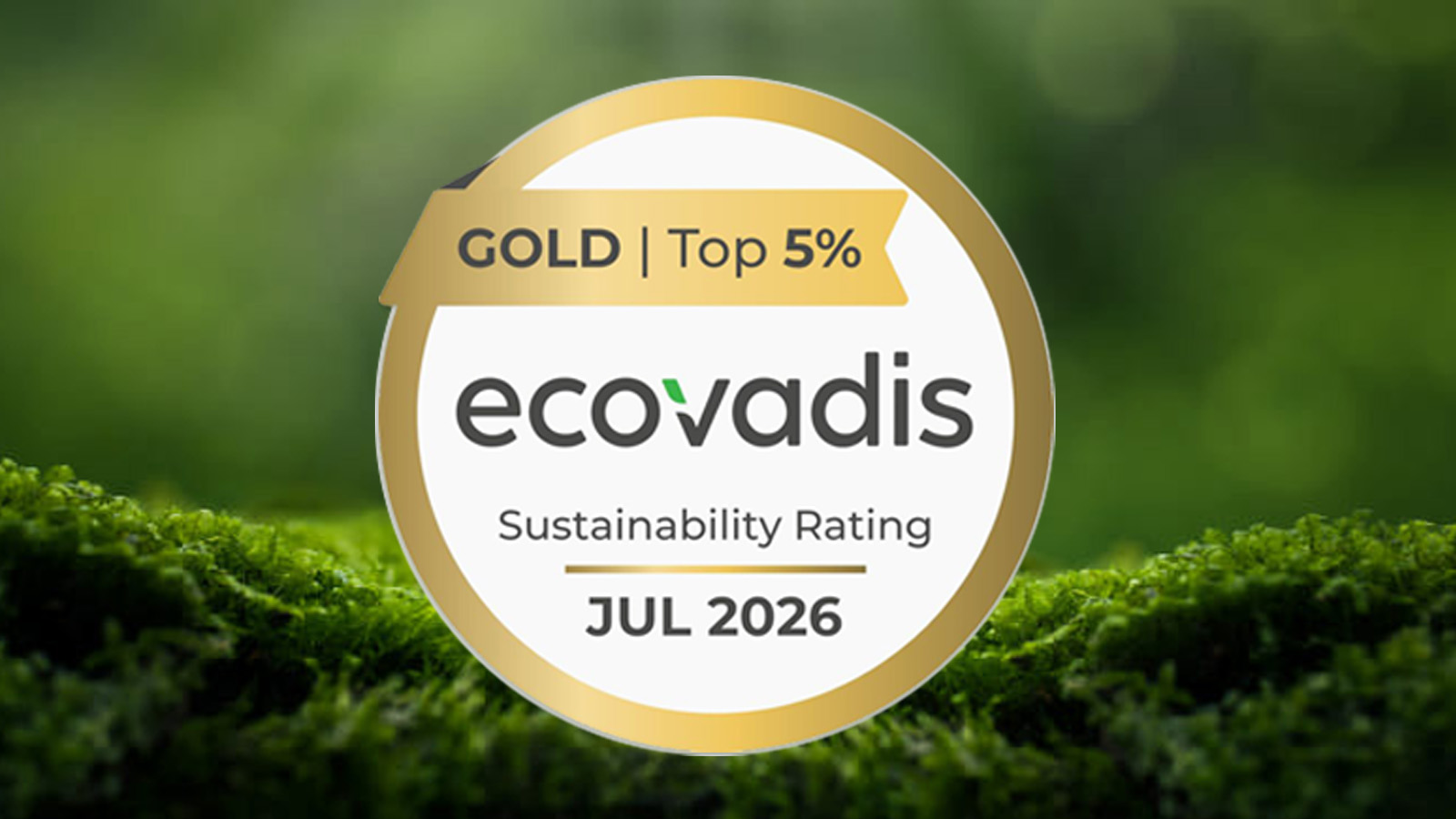
LANYACHEM Achieves EcoVadis Gold Medal Recognitio…
LANYACHEM is proud to announce that the company has achieved the EcoVadis Gold Medal rating in recognition of its outstanding performance in sustainability management. According to the latest EcoVadis assessment, LANYACHEM has been ranked among the top 5% of companies assessed worldwide, demonstrating the company’s continuous efforts and achievements in environmental management, labor and human rights, business ethics, and sustainable procurement. The upgrade from the previous EcoVadis Bronze Medal to the Gold Medal represents an important milestone in LANYACHEM’s sustainability journey. It reflects the company’s long-term commitment to responsible operations, continuous improvement, and the integration of sustainable practices into business development. About EcoVadis Sustainability Assessment EcoVadis is one of the world’s leading sustainability assessment organizations, providing evaluations of companies based on four key areas: Environment Labor & Human Rights Ethics Sustainable Procurement The assessment provides a comprehensive evaluation of corporate sustainability practices and has become an important reference for companies worldwide when selecting and evaluating business partners. Continuous Commitment to Sustainable Development Sustainability has always been an important part of LANYACHEM’s business philosophy. In recent years, the company has continuously improved its management systems and operational practices, focusing on the following areas: Environmental ManagementLANYACHEM continues to enhance environmental management practices, improve operational efficiency, and promote more responsible business operations. Supply Chain ResponsibilityThe company focuses on supply chain transparency and reliability, working closely with partners to build a more responsible and sustainable supply chain. Compliance and Business EthicsLANYACHEM continuously strengthens corporate governance, follows ethical business practices, and maintains high standards of compliance. Employee and Social ResponsibilityThe company values employee development, workplace safety, and responsible organizational management. The EcoVadis Gold Medal recognition reflects the results of these ongoing efforts and demonstrates LANYACHEM’s commitment to building a sustainable business foundation. Creating Long-Term Value for Customers and Partners With global industries increasingly focusing on sustainable development, customers are looking beyond product quality and delivery capabilities. Environmental responsibility, compliance management, and supply chain stability have become important factors when choosing reliable business partners. The EcoVadis Gold Medal further strengthens LANYACHEM’s ability to provide customers with: Responsible and reliable business operations Strong compliance management capabilities Sustainable supply chain cooperation Long-term support and partnership value LANYACHEM believes that sustainable growth is built on not only high-quality products and services, but also responsibility toward customers, partners, employees, and society. Moving Forward Toward a Sustainable Future Looking ahead, LANYACHEM will continue to improve its sustainability management system and integrate responsible practices into research and development, production, procurement, and customer service. Together with global customers and partners, LANYACHEM will continue to contribute to a greener, more reliable, and sustainable chemical industry.
Read More
EU REACH Restrictions on D4, D5, and D6: What Com…
The European chemical industry is facing increasing regulatory requirements, with sustainability, environmental protection, and product compliance becoming key considerations across global supply chains. Among recent regulatory developments, restrictions on D4, D5, and D6 under the EU REACH framework have attracted growing attention from companies involved in silicone materials, chemical manufacturing, and downstream applications. For businesses operating in global markets, understanding these regulatory changes and evaluating their impact on raw materials, formulations, and supply chain management are becoming increasingly important. What Are D4, D5, and D6? D4, D5, and D6 are cyclic siloxanes: D4: Octamethylcyclotetrasiloxane D5: Decamethylcyclopentasiloxane D6: Dodecamethylcyclohexasiloxane These substances are important components in silicone chemistry and are associated with various silicone-based materials and formulations. Due to their unique properties, including: Chemical stability Low surface tension Thermal resistance Compatibility with different formulations cyclic siloxanes have been widely used in silicone-related applications and industrial processes. With increasing attention toward environmental impact and chemical sustainability, regulatory evaluation of these substances has become an important topic for the silicone industry. Why Are D4, D5, and D6 Receiving Regulatory Attention? Under the EU REACH framework, chemical substances are evaluated based on their potential impact on human health and the environment. D4, D5, and D6 have received regulatory attention due to concerns related to properties such as: Environmental persistence Potential bioaccumulation Long-term environmental effects As regulatory requirements continue to evolve, companies involved in silicone materials and related applications need to pay closer attention to substance composition, residual levels, and compliance documentation. These developments reflect the broader transformation of the European chemical industry toward greater transparency, sustainability, and responsible chemical management. How Could These Changes Affect Silicone Supply Chains? The impact of regulatory developments extends beyond individual substances. It can influence multiple stages of the value chain, including raw material suppliers, manufacturers, distributors, and downstream users. 1. Raw Material Evaluation Is Becoming More Important Traditional raw material evaluation often focuses on performance parameters such as viscosity, purity, and functional properties. However, regulatory compliance information is becoming increasingly important. Companies may need to evaluate: Whether raw materials contain D4, D5, or D6 The potential level of cyclic siloxane residues Availability of relevant compliance documentation For silicone-related materials, residual control and regulatory transparency are becoming important factors in supplier selection. 2. Formulation Development May Require Additional Evaluation For silicone-based products such as: Silicone oils Silicone additives Adhesives and sealants Coatings Defoamers changes in raw materials may require additional technical evaluation. Replacing or optimizing silicone materials is not always a simple substitution process. Changes may influence: Compatibility Surface performance Volatility Stability Processing behavior Therefore, performance validation remains an important step during material transitions. 3. Supply Chain Communication Becomes Increasingly Important Modern chemical supply chains require more than consistent product quality. Customers are increasingly looking for: Updated SDS and TDS documentation Regulatory statements Compliance information Supporting test data when required Close cooperation between suppliers and customers helps ensure smoother regulatory management and long-term supply reliability. How Can Companies Prepare? To better respond to evolving regulatory requirements, companies can consider the following approaches: 1. Review Existing Materials and Products Companies should evaluate: Current raw material sources Potential D4/D5/D6 presence Available compliance information Customer-specific requirements A clear understanding of the supply chain is the first step toward effective compliance management. 2. Evaluate Suitable Material Solutions Companies can assess alternative approaches, including: Low-cyclic silicone materials Optimized silicone formulations Alternative silicone-based technologies The goal is to maintain required product performance while meeting evolving regulatory expectations. 3. Maintain Updated Technical Documentation When materials or formulations change, related documents should also be reviewed and updated, including: Safety Data Sheets (SDS) Technical Data Sheets (TDS) Regulatory statements Customer compliance documents Consistent technical and regulatory communication helps prevent potential challenges during customer audits or market expansion. Compliance and Innovation Go Hand in Hand Regulatory developments such as REACH restrictions are not only compliance considerations but also drivers for innovation. They encourage companies to improve: Material selection Product design Supply chain transparency Sustainability practices For businesses operating internationally, staying informed about regulatory trends is essential for maintaining competitiveness and building reliable partnerships. Supporting Customers in a Changing Regulatory Environment At LANYACHEM, we understand that regulatory compliance is an important part of modern chemical supply chains. By maintaining close communication with customers and monitoring global regulatory developments, we support partners in evaluating material solutions, improving supply chain transparency, and meeting changing market requirements. Reliable chemical solutions require not only consistent quality, but also a strong understanding of regulatory expectations.
Read More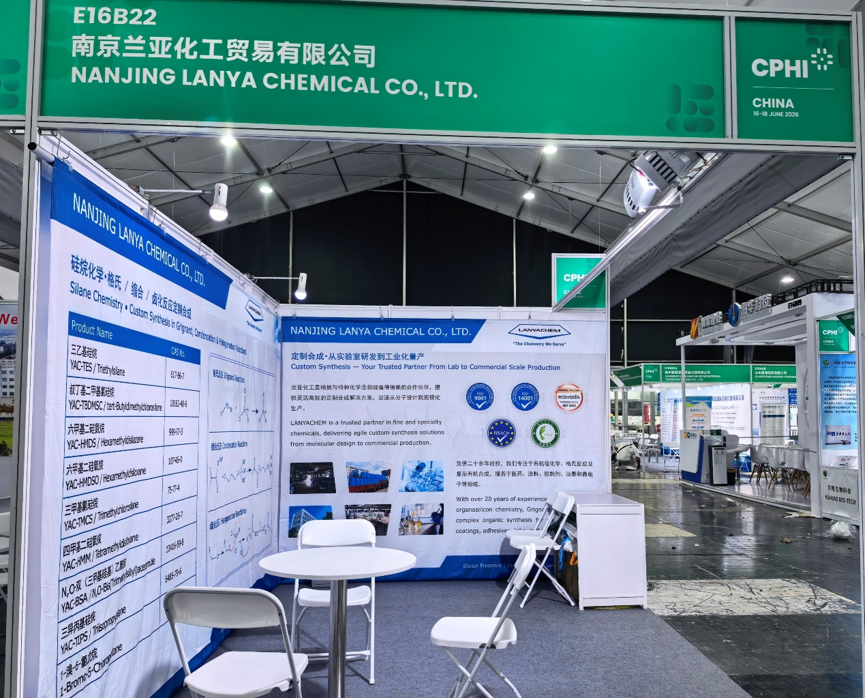
CPHI China 2026 Concludes Successfully | Thank Yo…
From June 16 to 18, 2026, CPHI China 2026 was successfully held at the Shanghai New International Expo Centre. As one of the leading events for the global pharmaceutical and chemical industries, the exhibition brought together companies, professionals, and industry partners from around the world. LANYACHEM participated at Booth E16B22, welcoming customers and partners from various countries and regions. The exhibition provided an excellent opportunity to strengthen existing relationships, establish new connections, and exchange insights on market trends and business opportunities. Showcasing Products and Solutions During the exhibition, LANYACHEM showcased a range of products and solutions, including pharmaceutical intermediates, organosilicon materials, and fine chemicals. Our team engaged in productive discussions with visitors on product applications, supply reliability, technical support, and customized solutions. These conversations enabled us to better understand customer needs while sharing our expertise and capabilities. Strengthening Global Connections Throughout the three-day event, we had the pleasure of meeting both long-term partners and new customers from across Asia, Europe, the Americas, and other regions. The exhibition served as an important platform for communication and collaboration, allowing us to gain valuable market insights and explore potential opportunities for future cooperation. We sincerely appreciate the trust, interest, and feedback shared by all visitors. A Professional Team Behind Every Conversation The success of our participation would not have been possible without the support of our customers, partners, and the dedication of our team. From exhibition preparation and product planning to on-site reception and business discussions, our team worked together to ensure a productive and successful experience for every visitor. Their professionalism and commitment played an important role in making this event a success. Looking Ahead As CPHI China 2026 comes to a close, we would like to thank everyone who visited our booth and spent time with our team. LANYACHEM remains committed to providing customers worldwide with reliable product supply, efficient technical support, and flexible customized solutions. We look forward to strengthening partnerships, exploring new opportunities, and creating greater value together. Thank you for visiting us at CPHI China 2026. We look forward to meeting you again in the future.
Read More
LANYACHEM at CHEMSPEC Europe 2026 in Cologne
From May 6 to 7, LANYACHEM’s European business team participated in CHEMSPEC Europe 2026 in Cologne, Germany. As one of Europe’s leading exhibitions for fine and specialty chemicals, the event brought together chemical companies, suppliers, and industry professionals from around the world to explore market developments, technical innovation, and future business opportunities. During the exhibition, LANYACHEM welcomed visitors at Booth 7C108, engaging in face-to-face discussions with customers and partners from various international markets. The event provided valuable opportunities to strengthen market connections and deepen communication with global industry stakeholders. Throughout the exhibition, the LANYACHEM team held extensive discussions with customers and professionals from Europe, the Middle East, Asia, and other regions, focusing on product applications, evolving market requirements, and supply chain cooperation. The event highlighted the increasing market emphasis on product consistency, supply reliability, technical support, and application-oriented solutions. Discussions with industry partners also reflected the growing demand for specialized and customized solutions to meet increasingly diverse application requirements. As global supply chains continue to evolve, customer expectations are expanding beyond product performance alone. Increasing attention is being placed on technical service capabilities, application compatibility, and the ability to support long-term cooperation through reliable supply and professional responsiveness. Through participation in CHEMSPEC Europe 2026, LANYACHEM gained valuable insights into changing market priorities, including: Stronger demand for product stability and consistency Greater focus on comprehensive performance in practical applications Higher expectations for long-term technical support and service responsiveness Growing interest in professional and customized material solutions These insights will continue to support LANYACHEM’s market development strategy and customer service efforts across international markets. CHEMSPEC Europe 2026 provided an important platform for strengthening industry connections and exchanging perspectives with global partners. LANYACHEM appreciates the opportunity to engage with customers and industry peers during the event and looks forward to continued cooperation in the future.
Read More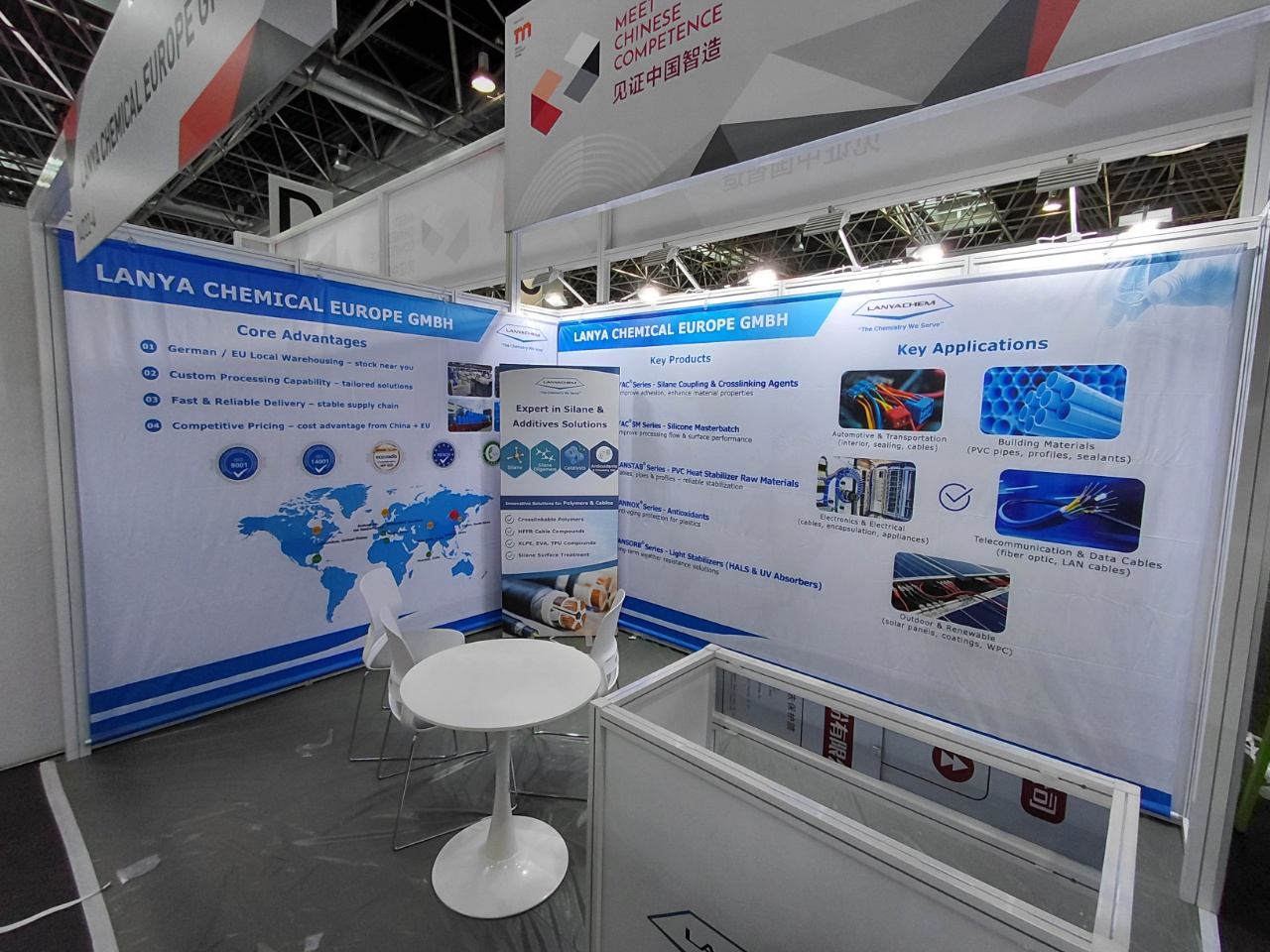
LANYACHEM at Wire & Tube 2026 in Düsseldorf
From April 13 to 17, Wire & Tube 2026 was held in Düsseldorf, Germany, bringing together professionals from across the global wire, cable, and tube industries. As one of the sector’s leading international exhibitions, the event provided an important platform for technical exchange, market insights, and business collaboration. During the exhibition, LANYACHEM welcomed visitors at Booth 14D22-4, engaging with customers, partners, and industry professionals from around the world. The event created valuable opportunities for focused discussions on material applications, performance requirements, and long-term cooperation. At the exhibition, LANYACHEM presented a range of material solutions for wire, cable, and pipe applications, including silane crosslinking systems, PVC-related additives, stabilizers, and functional additives. These materials support performance enhancement, processing optimization, and long-term reliability across various industrial applications. Throughout the event, discussions increasingly focused on practical application requirements, including material stability under demanding operating conditions, supply continuity, and compliance support for European regulatory frameworks such as REACH. These conversations reflected the growing market emphasis on application-oriented solutions and reliable long-term partnerships. The exhibition also highlighted several important industry trends, including the continued shift toward application-driven material selection, increasing expectations for supply chain stability and regulatory compliance, and stronger demand for integrated material solutions tailored to specific end-use requirements. With its European business team present throughout the event, LANYACHEM strengthened communication with both new and existing customers through direct, on-site engagement. These exchanges provided valuable insights into evolving market expectations and future development opportunities. Wire & Tube 2026 offered an important opportunity to deepen industry connections and strengthen collaboration. LANYACHEM appreciates the opportunity to connect with customers and partners during the exhibition and looks forward to continued cooperation in the future.
Read More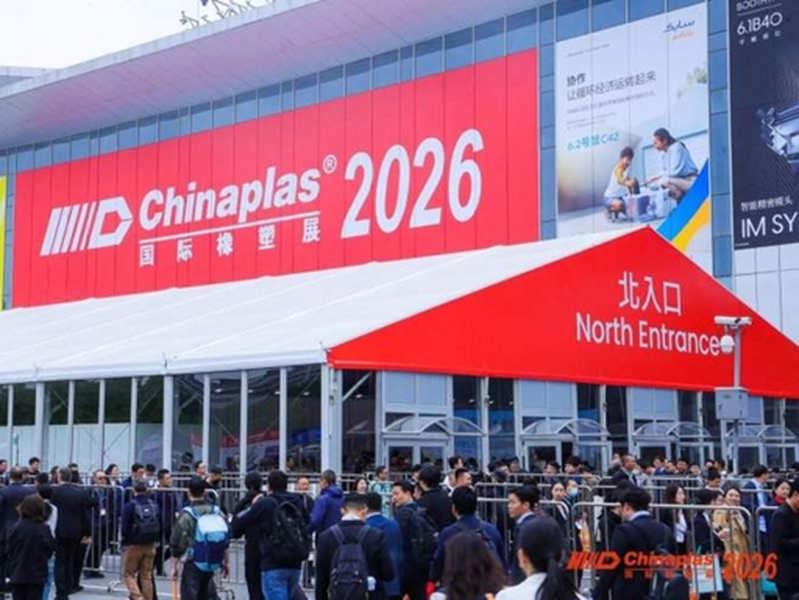
LANYACHEM at CHINAPLAS 2026 in Shanghai
From April 21 to 24, CHINAPLAS 2026 was held at the National Exhibition and Convention Center (NECC) in Shanghai, bringing together professionals from across the global plastics and rubber industry. As one of the industry’s leading international exhibitions, this year’s event covered an exhibition area of 390,000 square meters and attracted more than 5,000 exhibitors and over 320,000 professional visitors worldwide. During the exhibition, LANYACHEM presented its products and material solutions at Booth 8.2A87, engaging with customers, partners, and industry professionals from various regions through technical discussions and application-focused exchanges. At the booth, LANYACHEM showcased a range of products for plastics and rubber applications, including PVC stabilizer systems and related raw materials, silicone masterbatches, catalysts, antioxidants, light stabilizers, and UV absorbers. Through on-site communication and technical discussions, visitors gained further insights into the performance characteristics and application value of different material systems in plastics and rubber products. Throughout the event, the LANYACHEM team held in-depth discussions with both new and existing customers on topics including material performance, application optimization, and future cooperation opportunities. These exchanges further strengthened mutual understanding and provided valuable insights into evolving market needs. In parallel with the exhibition, a series of industry forums and technical conferences focused on topics such as sustainable development, digital manufacturing, advanced materials, and supply chain resilience. Discussions and shared industry perspectives highlighted the ongoing transformation and innovation within the plastics and rubber sector. CHINAPLAS 2026 provided an important platform for industry communication and collaboration. LANYACHEM appreciates the opportunity to connect with customers, partners, and industry peers throughout the exhibition. Looking ahead, LANYACHEM will continue to strengthen its expertise in material technologies and application solutions, with a focus on product innovation, stable supply, and technical support for global customers across diverse industries.
Read More